Immigration, Kinship, and Settlement at 408 Erie Street, Saint Paul, Minnesota
September 3, 2026
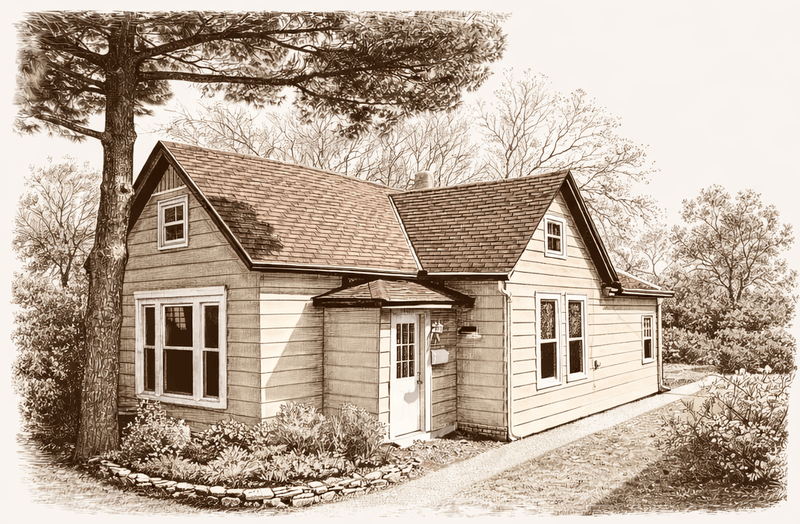
For many in this story, Bohemia had been home. Situated in the heart of Central Europe, the kingdom stretched across lands that included Bohemia proper and neighboring regions. Prague had once stood at the center of Bohemia’s imperial power, and its people carried a deep sense of history, language, and place. By the nineteenth century, however, political upheaval, population pressures, limited access to land, and economic instability made survival uncertain for many families. Those who had worked the same trades for generations found themselves with no clear future for providing for themselves or their children. People from Germany, Hungary, the Scandinavian countries and others, driven by many of the same pressures and uncertainties as those from Bohemia, set out as well to look for new opportunities.
After 1830, waves of European immigrants crossed the Atlantic, drawn by the promise of land ownership, employment, and personal freedom in the United States. The Homestead Act of 1862 proved especially influential, offering 160 acres of land at no cost to those willing to settle and improve it. This legislation was a powerful pull factor for people eager to escape overcrowding and land scarcity. Though immigration slowed during the American Civil War, as many young men feared conscription into a conflict they had had no role in creating, the pace surged again after the war’s end.
The journey to America was long and grueling. Many immigrants first traveled by rail to ports such as Bremen or Hamburg, Germany, then boarded large passenger sailing barques or later, steamships, bound for New York, or sometimes Canada or even New Orleans. Most crossed in steerage enduring crowded conditions and weeks at sea. Yet the hardship was borne with hope: the chance to build a future which had become impossible in their old world.
By the 1860s and 1870s, Minnesota in particular was actively encouraging immigration and promoting its farmland, jobs, and better prospects. Newcomers found their way to Saint Paul, especially the neighborhoods along West Seventh Street, where work and community took shape side by side. Men labored in breweries, railroads, quarries, icehouses, and workshops, laying the physical and economic foundations of the city. Skilled artisans practiced trades such as shoemaking, tailoring, masonry, blacksmithing, and brewing. Lesser-skilled workmen did the backbreaking jobs that kept everything going. Women kept the home and reared the children. Churches and cultural and fraternal organizations offered a sense of belonging and mutual aid.
Immigration is not only a movement of people but a reshaping of place. The stories of the men and women who immigrated to Saint Paul began with departure from a home overseas, but it was ultimately a story of arrival. Unfamiliar streets became neighborhoods, though memory and tradition survived distance.
The full story of these immigrants who made their way to 408 Erie Street is available as a PDF. It was originally self-published by the author, but is being made available here to facilitate search terms. Below is a list of tags for the purposes of search engines since they do not search individual PDFs. The ISBN number for the original publication is ISBN 978-0-1234-6578-8, copyright 2026 by Kathi C. Wong.
Tags:
- Mississippi River
- Minneapolis
- Upper Landing, Lower Landing
- Fort Road, Fort Road corridor, West Seventh Street
- Valley of the St. Peters, St. Peters River, Saint Peters, Minnesota River
- Seth Eastman, artist; Max Strobel, artist
- native Americans, Dakota tribe, Ojibwe tribe
- Mnísota, Ȟaȟáwakpa, Bdote, Wakpá Tháŋk
- Midwest, Upper Midwest, Northern Plains
- European fur traders
- French Empire, British Empire
- U.S. Army, Fort Snelling military reservation
- pioneer families
- Pierre “Pig’s Eye” Parrant,” French-Canadian
- Fountain Cave
- John Vanek
- Benjamin Gervais, Genevieve Gervais ,William Beaumette, John Miller,Vetal Guerin, François Leblanc, Abraham Perry, Marie Anne Perry, Peter Müller
- Carver’s Cave
- Father Lucien Galtier
- Mendota
- St. Peter’s, Saint Peters, Pierre River
- squatting on public land
- land acquisition, land speculation
- Minnesota Territory
- Richard Freeborn
- Federal Bureau of Land Management General Land Office, St. Croix, Saint Croix
- Henry Jackson
- Henry S. Fairchild
- Stinson, Brown, and Ramsey Addition
- (first name unknown) Winslow, (first name unknown) Rice
- Cascade Street, Cascade Creek
- James M. Goodhue, Minnesota Pioneer
- Saint Paul growth, population, census
- steamboats, steam railroads
- Public Land Survey System
- maps and atlases: Counting House Map of the City of Saint Paul (1869), Stinson and Ramsey’s Subdivision Plat (1878), Sanborn Fire Insurance Atlas (1885, 1903), Rascher Insurance Atlas (1891), Ramsey and Manomin Counties and Hennepin East (1867), Curtice’s Standard Atlas of the City of Saint Paul, Ramsey and Manomin Counties and Hennepin East (1887), Plat Book of the City of Saint Paul (1916), Map of Saint Paul (1919), HOLC red-lining map of Saint Paul (1934)
- Justus C. Ramsey, Alexander Ramsey, Ramsey County, William Stinson, A. Vance Brown
- Catholic Orphan Asylum Association, Protestant Orphan Asylum
- public works, taxes, special tax assessments, wooden sidewalks
- Michigan Street, Wabasha Street, Palace Avenue, Oneida Street, Jefferson Street, Colborne Street, Saint Clair Avenue, St. Clair Avenue, Butternut Avenue, James Avenue, James Street, Randolph Avenue, Toronto Street, Robert Street, Annapolis Street, Wesley Avenue, Grand Avenue, Tuscarora Avenue, Seven Corners
- Cave Brewery, Stahlman’s Brewery, Schmidt’s Brewery, Christopher Stahlman
- R.C. Libbey Lumber Yard
- shanties
- quarry, rock, sandstone, Platteville limestone
- Chicago, Saint Paul, Minneapolis and Omaha Railway shops (shortened version: Omaha railroad shops), railroad fireman, blacksmith, watchman
- electric streetcar lines, horse cars, City and County Hospital
- Saint Paul Public Schools, Bridge View School
- summer garden, bowling alley
- Saint Francis de Sales Church
- sandstone sewer tunnel map, wastewater, water supply, water mains, electric tunnels, district steam networks, central boilers, telephone lines, gas lines, street railway cables, underground infrastructure
- Greg Brick
- Stinson & Ramsey’s Subdivision
- legal description
- building permit
- immigrants, immigration, naturalized, naturalization
- shanty, tent
- weather, winter, Blizzard of 1881-1882, Blizzard of 1888, 1899 tornado, New Richmond (Wisconsin), circus
- German, Polish, Italian
- Czechoslovakia, Austro-Hungarian Empire, Moravian, Silesian, Bohemia, Kingdom of Hungary, Austria, Little Hungarian Plain, Mosoni-Duna River, Croatia, Germany, Bremen (Germany), Saxony (Germany)
- Chicago, New York, Castle Garden, Oregon (Portland), California, Indiana (Terra Haute). Michigan (Detroit), Grosse Île (Quebec, Canada)
- farmer, agriculture, unskilled laborer, musician, cigar maker, vinegar maker
- Kuhles and Stock, Lauer Brothers construction firm, F. W. Tuchelt’s Sons
- Adolph Krtecius (variants: Kretecius, Kartezius, Kretezins, Krtezius, Kartak, Keticins, Krtecins, Krteticius, Ketecius) (born 1861, Bohemia); Francisca Koldinowa Krtecius, Johann Krtecius, Fanny Krtecius, Annie Krtecius, Joseph Krtecius, Frank Krtecius, Henry Krtecius.
- Ferdinandus Stipkovits (variants: Stipkovits, Stipkovitz, Stipkovics, Stepkowich, Stepkovitz, Stipkovita, Styskovts, Slipkovitz, Stepwith (aka Frederick, Ference, Fred, Ferdinand) (born 1837, Hungary, Austro-Hungarian empire), Horvátkimle, Kingdom of Hungary ; Teresia Stipkovits (aka Theresa, Theresia), Leopold Stipkovits (aka Leobolt), Theresa Stipkovits (aka Tekla, Dekla, Maggie), Mary Stipkovits, Antonia Stipkovits, Rosa Farkas (variants: Farkos, Vargas, Varga, Wolff), Benedict Kast (variant: Cast), Mathias Mickolai (variants: Miculai, Nickulai)
- Bernard Wagner
- Margaret Kennig, widow of Frank; Louis Jobst
- John D. Morgan quarry, H. S. Fairchild quarry, “Leonard” quarry
- hydroponics
- Cascade waterfall, Cascade water power, Fountain Cascade, Fountain Creek, Fountain Cave, Cascade Creek
- Melchoir Funk Brewery, Frederick Emmert Brewing Company, Theo Hamm Brewing Company
- Elizabeth Ellet
- Thomas Oper (variants: Oupor, Ober, Ouper) (born 1865, Bohemia), Joseph Oper (aka Josef), Mary Trestik, Franz Oper, Anna Oper, Frank Oper, Anna Agnes Oper, Ferdinand Oper (aka Frederick), John Oper, Mary Oper Materna, Mary Petrasek Oper, Anna Helen Oper, Anna Agnes Oper Steffen, Peter Steffen, Dominick Petrasek, Marketa Petrasek, Veronica Petrasek, John Petrasek, Mary Petrasek, Vansel James Petrasek, Alfred Bonn (born 1887, Saint Paul), Victor Bonn, Teresa Bonn, Mamie Bonn
- Polish Settlement, Bohemian Settlement, Little Italy, (not Minneapolis’s Bohemian Flats)
- High Bridge
- Civil War, Confederate, Union, draft
- Czech Slovak Protective Society (CSPS), Guide Council, Sokol exercise, library, polka, concerts, dances
- Saint Stanislaus Church
- Minnesota Soap Company, Brown and Bigelow, G. Sommer and Company
- stonemason, teamster, machine operator, malster, clairvoyant, police, charwoman, washerwoman, electrician, carpenter, custodian, messenger, clerk, traveling shoe salesman
- saloon, John Schramm
- bankruptcy, mortgage, indenture, land grant, plat, quit claim, probate,
- Anton M. Decker, contractor
- Consumers Power Company
- Zoe Zoe
- Great Northern Railway
- William Farber (variant: Färber) (born 1882, Saint Paul), John B. Vetter, Walburga C. Stoeckle Vetter, Mary Vetter, Wilhelm L. Farber, Auguste Farber, Hermann Farber, Freda Kuechler (Freida, Frieda), Fred Kuechler, Clara Ludemann Kuechler, Audrey Kuechler, Eleanor Kuechler, Oscar J. Farber
- leather tradesman, saddler, Colonial Tea Room, tea leaf reading, palm readings, server, parking, boarders
- Fort Snelling National Cemetery
- Becker County, Minnesota; Hamburg, Germany; Detroit, Minnesota
- Sir Isaac Newton barque (ship)
- quarantine, measles, smallpox
- Rose’s Drug Store
- divorce, abandonment, desertion
- Saint Paul Music Academy
- wedding (rituals in 1917)
- World War I
- Red Wing Shoe Company
- Stewart combination range, Airedale, violin, REO touring car, REO truck
- Charles Koeth (born 1882, La Crosse, Wisconsin) (variants: Köthe, Koethe), Grace Morrison Koeth, Charles Koeth Jr., Eugene Koeth, John Koeth, Lloyd Koeth, Donald Koeth, Doris Koeth, Günther Koeth, Magdalena Schott Koeth (aka Emma), Joel C. Morrison, Sina Thompson Morrison
- Kyffhäuserkreis, Thuringia, Germany (Saxony); Hessen, Germany; Trempealeau, Wisconsin; Winona County, Minnesota; Rochester, Minnesota
- East Lincoln Cemetery, Amery, Polk County, Wisconsin
- Irish, Norwegian
- Second Wisconsin Cavalry, Vicksburg, Mississippi
- Laura Ingalls Wilder, The Long Winter, South Dakota
- Montgomery Ward, Ryan Hotel
- Redlining, African Americans
- Stanley Mirovsky, Katherine Pavek, Mirovsky, John Schneider, Anna Mirovskey Schneider, Vivian Schneider, John George Schneider Jr., Richard Schneider, Eugene Schneider, Franz Xavier Schneider, Mary Elizabeth Florian
- Urloffen, Baden-Württemberg, Germany; Suchdol nad Lužnicí, Czech Republic; Rice, Minnesota
- Puritan Baking Company
- Volstead Act, Prohibition, organized crime, Great Depression, World War II
- Edward Knippenberg (born 1905, Prescott, Wisconsin), Katherine Knippenberg, Robert Knippenberg (aka Knip), Emil Knippenberg, Estella Palmer Knippenberg, Barbara Knippenberg Danley (aka Barbie), Louis (aka Louie) Knippenberg, Thomas Knippenberg, Roger Knippenberg, Betty Gamble Knippenberg (married to Bob), Harold T. Danley, Wanda L. Sanft Knippenberg (married to Louis), Mary Lee Garrison Knippenberg (married to Thomas)
- General Werder (iron screw passenger liner), Beverly Grasz Knippenberg (married to Roger)
- steamboat river pilot, cook, Hormel Meat Company, State Bond Mortgage Company, Alcoa Company, Honeywell
- University of Minnesota Golden Gopher football team, Civil Air Patrol,
- Puritan; Nova Scotia; Columbus, Ohio; Dallas, Texas; Mount Vernon, Texas
- Monroe High School, Global Arts Plus, M Club, Girls’ Athletic Association (GAA), “A” choir
- Rohland’s grocer, Mrs. Esboldt’s grocer, Virginia Mottaz’s hair salon, Andrew Lavrinet’s barbershop, Slaby’s garage, McNeely’s shoe repair, Roger’s Flowers, Larry’s Diner, Golden Rule, Schuneman’s, the Emporium
- coal room, coal heat
- National River and Recreation Area, Minnesota, of the National Park Service
- ethnic origin, Hmong, Jewish, Mexican, Burmese

